Across the Pacific Northwest, cities are reimagining how buildings are powered and kept comfortable. Thermal Energy Networks (TENs) are rising as a cleaner, more efficient alternative to traditional heating and cooling systems, and they’re opening the door for electrical professionals to take the lead in shaping the future of building energy.
What are Thermal Energy Networks?
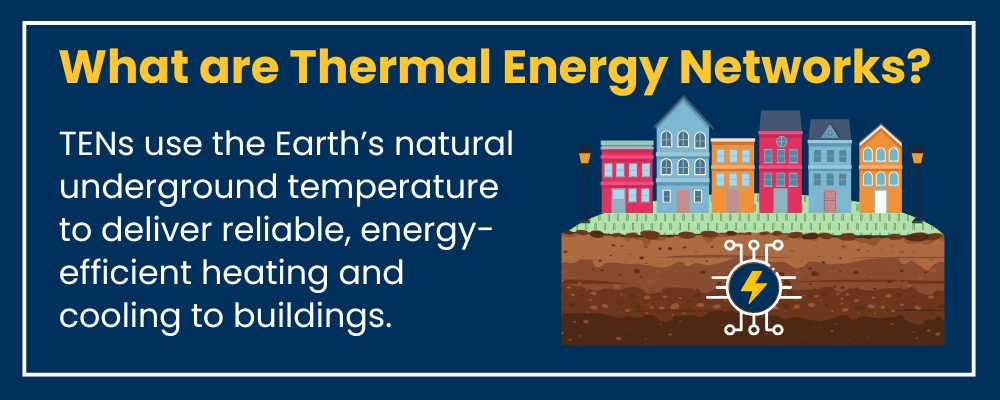
TENs use the Earth’s natural underground temperature to deliver reliable, energy-efficient heating and cooling to buildings. Unlike traditional HVAC systems that rely on combustion or electricity alone, TENs harness geothermal energy, reducing emissions and operational costs.
How Do TENs Work?
While climates and weather change continually above ground, a few feet underground, the temperature remains relatively consistent at 50–60°F. Thermal energy networks take advantage of these stable temps.
To deliver energy, they use buried piping systems called ground loops, along with pumps and boreholes. The loops are filled with fluid that absorbs and releases heat. In cooler months, TENs draw heat from the ground and transfer it indoors. As temperatures warm, the networks pull excess heat from inside a building and redistribute it back into the earth.
For these networks to function, they need electricity to run a heat pump. However, since TENs do not generate heat, their electrical consumption is far lower than that of other traditional systems. A study points to TENs offering a 25% reduction in peak winter electricity demand. Over time, these geothermal networks could save up to 70% on heating and cooling costs.
What are the Pros of Thermal Energy?
Thermal Energy Networks offer an efficient, eco-friendly way to heat and cool buildings. Key benefits include:
- Cleaner for the planet: Use renewable or waste heat to cut carbon emissions.
- Highly efficient: Energy is shared and balanced across the network.
- Cost savings: Lower operating costs thanks to efficiency and reduced fuel use.
- Scalable and adaptable: Can integrate with different energy sources as communities grow.
- Built-in resilience: Centralized systems handle extreme weather and energy disruptions more reliably.
Thermal Energy FAQs for Electrical Professionals
How do TENs impact the electrical industry?
TENs create new opportunities in controls, sensors, automation, and smart grid integration, expanding the role of electrical professionals in energy management.
Are TENs reliable?
Yes. Geothermal energy is constant, and with underground pipes lasting 50+ years, TENs provide long-term reliability and can integrate with backup power.
What climate is best for TENs?
TENs work in nearly any climate, but perform best in areas with seasonal temperature swings, dense neighborhoods, or sites with excess heat like data centers, making them ideal for the Pacific Northwest.
Are TENs secure?
Yes. Their closed-loop water systems operate independently of other infrastructure, ensuring 24/7 energy security and reducing reliance on fuel markets.
Building the Future of Thermal Energy Networks
Right now, eight states have already passed laws to launch or expand TEN projects. Another four states are studying how geothermal energy might be used to power these systems.
Who’s allowed to own and run a TEN?
- Private developers: Companies that specialize in building and managing energy projects.
- Investor-owned utilities: Traditional utility providers from which many households already get electricity.
- Cities and co-ops: Local governments and cooperatives can create TEN projects tailored to their communities.
- Community-owned systems: A newer model where the TEN is owned and operated by a nonprofit or community partnership. Local residents, in turn, help make decisions and manage finances on behalf of the group.
Are TENs Planned for the Pacific Northwest? 
Approval of TENs in the region looks promising. Washington is already moving to integrate thermal energy networks into its energy framework. In 2024, the state authorized electric and gas utilities and public utility districts to own and operate TEN infrastructure. The law created a pilot program requiring gas utilities to propose projects within a year and complete construction within 30 months. In 2025, legislation expanded oversight to non-utility TEN providers serving larger customer bases and established a commission to monitor national and international standards.
Together, these policies position TENs as regulated, utility-scale infrastructure in Washington. As initiatives expand, they create new opportunities for the electrical sector to support design, construction, and integration with grid modernization and electrification strategies.
Electricians’ Role Across Thermal Energy Networks
As TENs grow, electricians with experience in renewable energy systems, distributed energy resources, and smart grid technologies will find new ways to contribute. They power and maintain heat pumps and circulation pumps, integrate smart controls to optimize network performance, and enable flexible operation that can support grid balancing. Their planning, problem-solving, and technical expertise ensure projects run efficiently and that communities reap the full benefits of cleaner, smarter energy.
Join a Supportive Network Driving the Electrical Industry Forward
For over a century, the NECA–IBEW Local 48 partnership has been at the heart of serving Oregon and Southwest Washington’s electrical industry.
Visit our membership pages for the Oregon-Columbia Chapter of NECA or IBEW Local 48 to learn more.
SIGN UP FOR OUR NEWSLETTER
 “I know that being in this trade and being an apprentice can be time-consuming. But I believe dedication and impulse control are key. You can make time by cutting out things that aren’t necessary or important.
 when I decided to make the switch. Before that, I was working as a machinist at Columbia Engineering Works. I remember watching the electricians on the job, thinking, ‘Those guys are making a lot more money than I am and they don’t seem to be working as hard!’ One of the machinists I worked with ended up applying to the union, and when he came back and told me about it, I thought, ‘Okay, it’s my turn!’ So, I went ahead and applied myself.”
 demanding hours, with weekend shifts and split schedules. I needed a change, something with a regular eight-to-five schedule and weekends off so that I could spend more time with my family. One day, I was riding an elevator and I overheard someone mention the IBEW. I asked them about it, got some information, and after considering it, decided it was the right career move for me.”
 the IBEW. It’s what keeps the IBEW working and running, and it brings the cohesiveness of being a part of something bigger. So, going to that first conference was like, ‘Oh, this is way more than just a career to make money and take care of your family. This is way bigger than that.’”
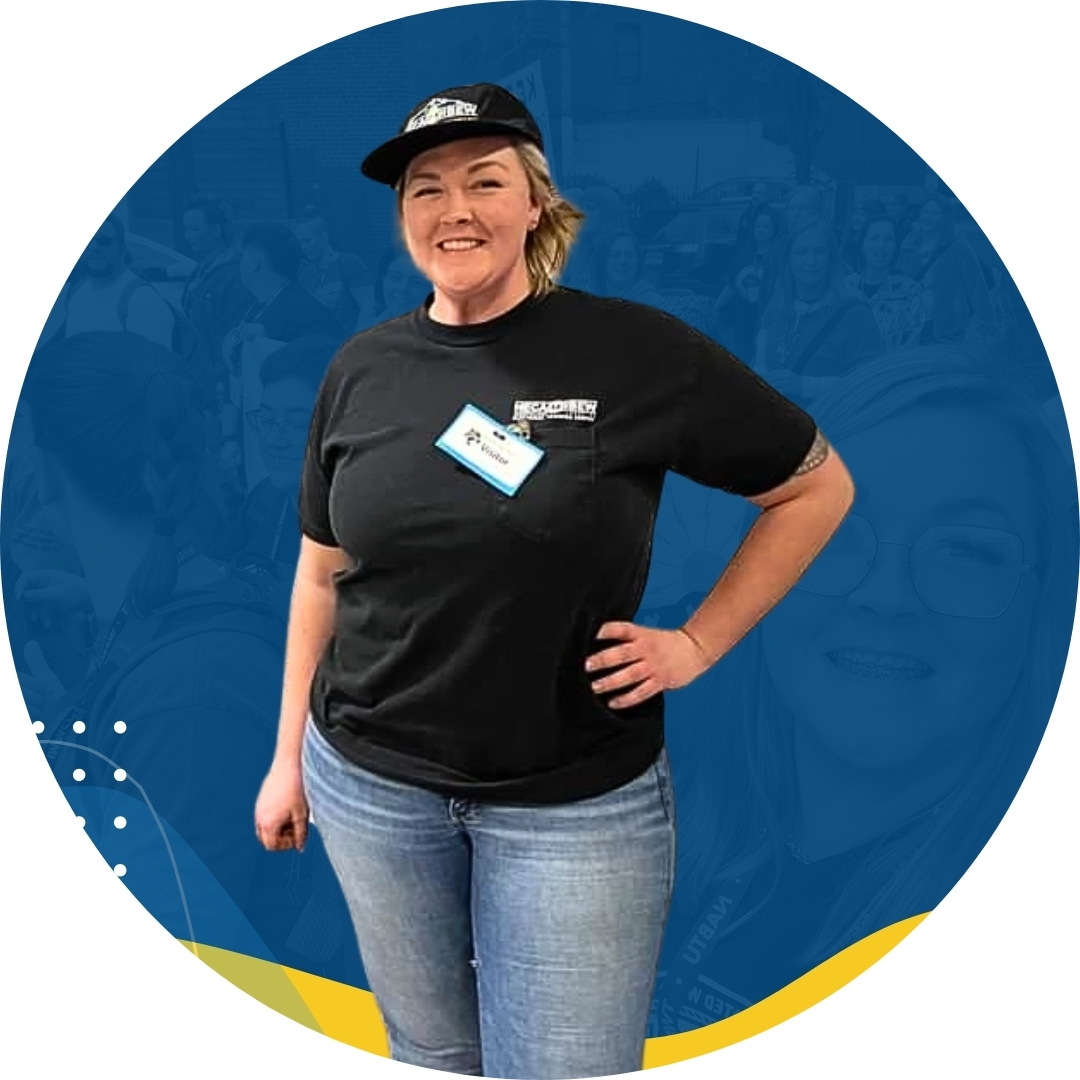 it sooner! From the very beginning of my apprenticeship, I have been a volunteer, an ambassador, and a mentor. I’ve helped two dozen people join the trade and have been volunteering to talk to high schools for the seven years I’ve been with IBEW Local 48. I know these commitments helped me get selected to join the Sisters in Solidarity sponsored trip to the 2023 Tradeswomen Build Nations Conference in Washington D.C. and it changed everything.”
 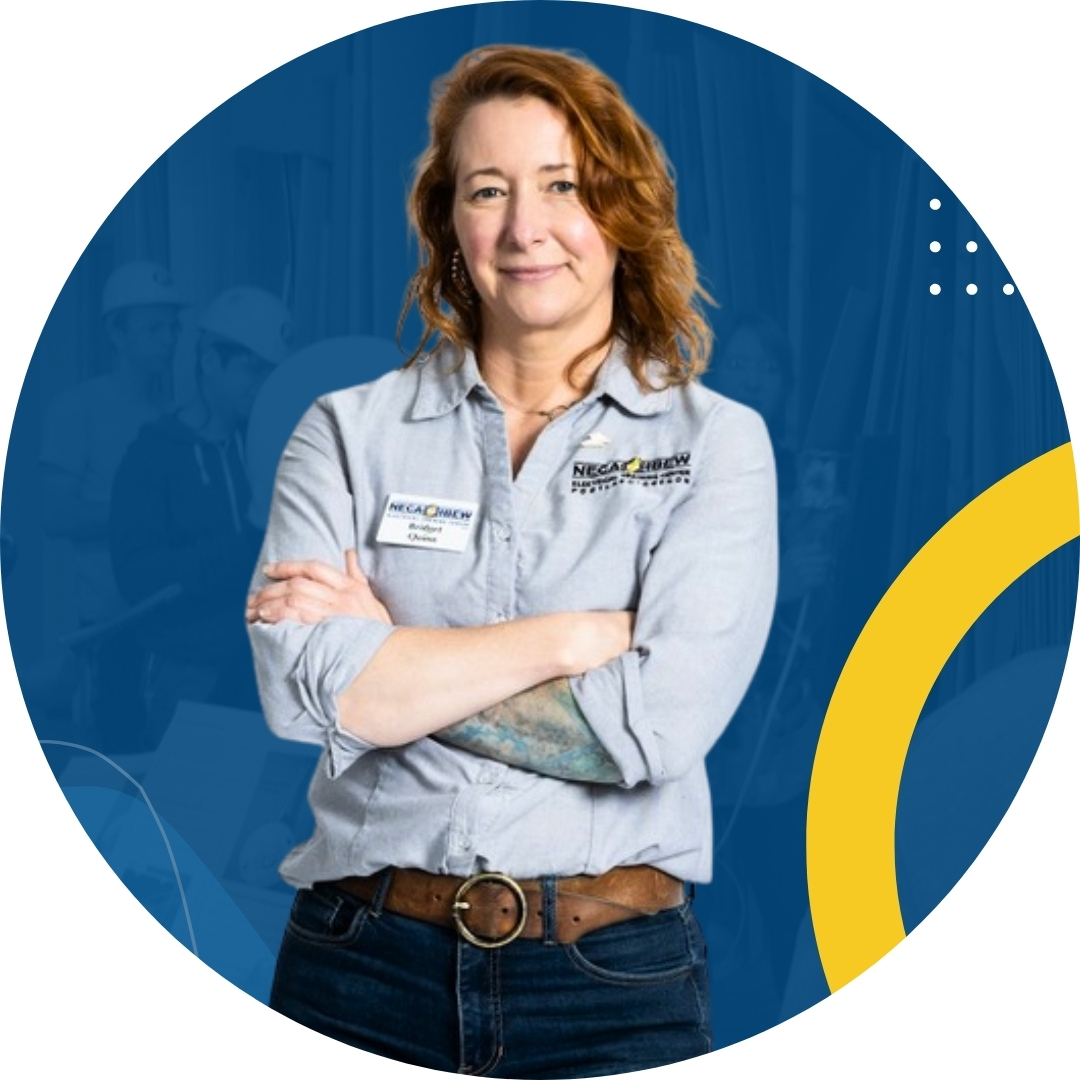 speaking engagements in classrooms. This allows us to match individuals from our diverse community with schools that share similar diversity and age groups.”


 I’m surrounded by some of the most inspiring, hardworking, and smart people—some of them are really competitive, too. But they’re also a lot of fun to be around, whether it’s on the job site or with my classmates. I’m so happy and fortunate to be part of this community…I can’t stress enough what the union means, not just to me, but to working
  I met an electrician who changed everything for me. He told me about an apprenticeship program. Meeting him was lucky because it led me to a career where I could use my hands-on skills in a big way…[Now] I also run our Ambassador 48 program, which is a platform to train our members for career fairs and speaking engagements in classrooms. This allows us to match individuals from our diverse community with schools that share similar diversity and age groups.
 I’m now gainfully employed making $60.50 an hour as a Journeyman Electrician, own my own home, and have all the resources of a strong union at my fingertips. What’s more, I get to help others succeed. It’s the absolute all-time high for me.
 business support. For over a century, the Oregon-Columbia Chapter has proudly served the electrical contracting industry in Oregon and Southwest Washington, helping local contractors grow, adapt, and thrive in an ever-evolving marketplace.