
Electrical Safety Tips: Construction Industry Tools & Resources

Electrical professionals face some of the most complex jobsite hazards in the construction industry. From energized equipment and elevated work to confined spaces and changing weather conditions, maintaining a safe work environment requires staying informed, prepared, and compliant.
3 Electrical Safety Tips for Every Jobsite
Safety regulations, electrical codes, and industry best practices continue to evolve. For electricians, contractors, supervisors, and field crews, having access to reliable resources helps reduce risk, improve jobsite efficiency, and support compliance with current workplace requirements.
1. Proper PPE for Workplace Electrical Safety
Strong workplace electrical safety programs rely on properly selected and fitted personal protective equipment and compliance with OSHA electrical safety standards. OSHA requires employers to provide appropriate PPE and ensure workers understand when and how to use it to reduce electrical hazards and maintain a safe work environment.
For electrical professionals, this includes:
- Arc-rated clothing
- Voltage-rated gloves
- Hard hats and eye protection
- Fall protection harnesses
- Respiratory protection, when required
Well-fitted PPE improves both worker comfort and protection, helping reduce the risk of serious injuries while meeting current safety expectations.
2. Stay Current with OSHA Electrical Safety Training Requirements
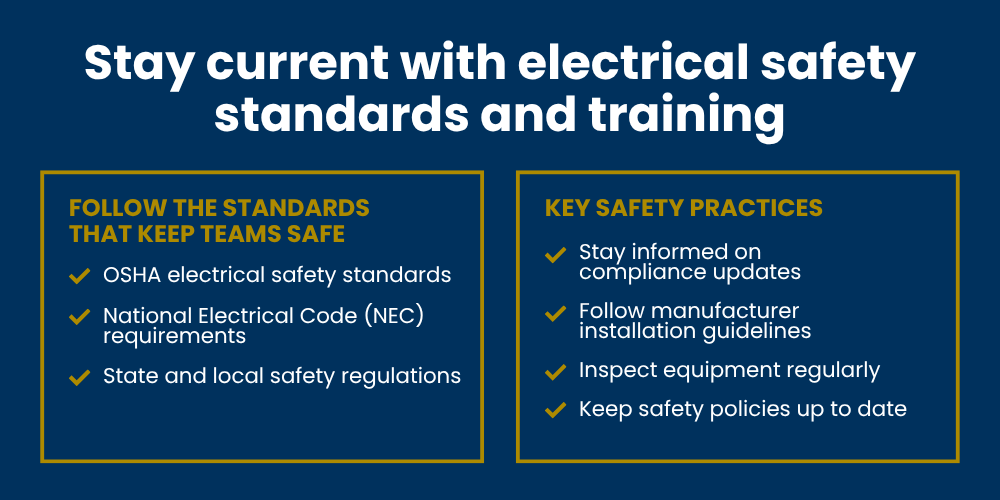
OSHA electrical safety standards, along with the National Electrical Code (NEC) and applicable state regulations, establish the framework for safe electrical work, so it’s crucial to stay up to date on requirements.
- Stay informed about state and local safety compliance requirements.
- Review manufacturer installation instructions.
- Perform regular equipment inspections.
- Update company safety policies as standards change.
OSHA expects employers to train workers to recognize workplace hazards and follow safe work practices appropriate to their assigned tasks. In addition to OSHA training expectations, contractors should encourage continuing education through apprenticeship programs, manufacturer training, and electrical code update courses to keep crews informed as industry standards evolve.
3. Keeping a Record of Workplace Electrical Safety Documents
Accurate documentation is an essential part of workplace electrical safety and regulatory compliance. Organized records help contractors demonstrate their commitment to safety while improving communication across the organization.
Important records include:
- Employee training certifications
- Safety meeting attendance
- Equipment inspections
- Incident and near-miss reports
- Corrective actions
- PPE inspections and replacement schedules
Electrical Safety Resources: A Quick Guide
Reliable information is one of the most valuable safety tools available for electrical contractors and workers. These resources help contractors stay informed about changing electrical safety rules, new technologies, and industry best practices:
- OSHA guidance for electrical safety and construction
- National Electrical Code (NEC) publications and training
- National Fire Protection Association (NFPA) standards and educational resources
- National Electrical Safety Code (NESC) guidance
What is the National Fire Protection Association (NFPA), and why is it important?
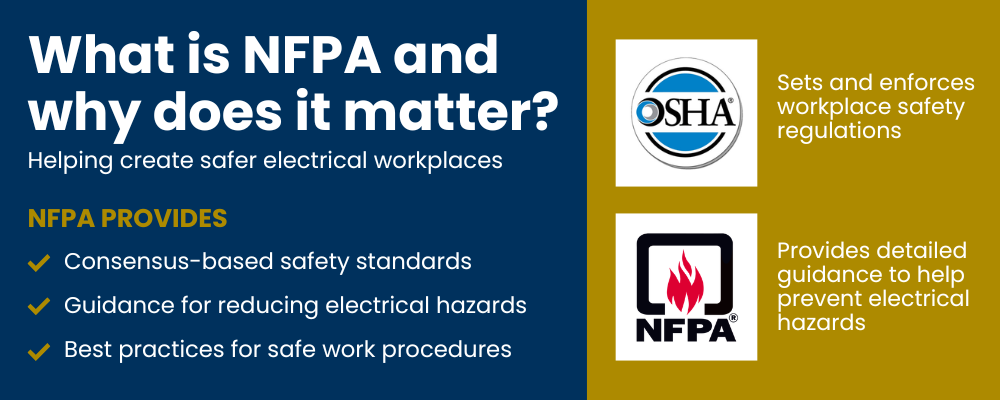
The NFPA develops consensus standards that help improve electrical safety in the workplace. While OSHA establishes and enforces workplace safety regulations, NFPA standards provide detailed guidance on reducing electrical hazards and implementing safe work practices.
Electrical contractors and safety professionals commonly use NFPA resources to:
- Improve electrical safety programs
- Understand arc flash and shock protection requirements
- Support lockout/tagout procedures
- Stay current with National Electrical Code (NEC) updates
- Train employees on electrical hazard recognition and risk assessment
What is the National Electrical Safety Code (NESC)?
The NESC is a safety standard published by IEEE that establishes requirements for the installation, operation, and maintenance of electric supply and communication systems. It is widely used by electric utilities, utility contractors, and organizations responsible for overhead and underground power infrastructure.
The NESC is especially valuable for professionals involved in:
- Utility construction and maintenance
- Overhead and underground electrical distribution
- Transmission line construction
- Communication infrastructure projects
- Working safely around energized utility systems
Workplace Electrical Safety for a Stronger Industry
Staying compliant and safe in the electrical industry requires support and access to up-to-date information. The NECA-IBEW Local 48 partnership helps members connect with training, industry updates, and a network of professionals committed to safety, growth, and success.
Beyond safety and training resources, members also have access to support that helps strengthen their businesses. Visit our Marketing Support page for resources.
SIGN UP FOR OUR NEWSLETTER
