
Winter Jobsite Safety: What Electricians Need to Know Before Storm Season

Winter brings rain, freezing temperatures, high winds, and shorter daylight hours across the Pacific Northwest. For electrical workers, these conditions increase the risk of cold stress, falls, and electrical hazards. Storms can also damage power lines and equipment, creating dangerous conditions for crews responding to outages.
With the right winter PPE, cold weather safety practices, and storm-response procedures, electricians can prepare for changing conditions and protect themselves and their crews throughout the season.
Understanding Cold Weather Safety on the Jobsite
Cold, wet conditions put additional demands on the body. Wind, wet clothing, and prolonged exposure can cause cold stress, while ice, mud, and poor visibility increase the risk of falls and other injuries. Cold stress isn’t limited to freezing weather. Wet conditions can cause cold-related injuries, such as trench foot, even when temperatures are well above freezing.
Recognizing the Signs of Cold Stress
Recognizing symptoms early helps crews respond before cold exposure becomes a medical emergency.
- Hypothermia: Shivering, exhaustion, confusion, and impaired coordination can indicate a dangerous drop in body temperature. A worker who stops shivering, has bluish skin, or loses consciousness needs emergency medical help immediately.
- Frostbite: Numbness, tingling, and bluish, pale, or waxy-looking skin may indicate tissue damage, especially on fingers, toes, ears, and the nose. Seek prompt medical care, and do not rub or massage the area or warm it with a heating pad, heat lamp, or similar heat source.
- Trench foot: Reddened, numb, tingling, or swollen feet, or blisters, after prolonged exposure to wet conditions can signal trench foot, which can develop at temperatures as high as 60°F. Keep feet as dry as possible and change wet socks and footwear promptly.
- Early warning signs: Cold hands, reduced dexterity, and poor coordination can make handling tools and equipment more difficult.
Alert a supervisor, request medical help, move the affected worker to a warm, dry area, and remove wet clothing. Confusion, slurred speech, or loss of coordination may signal a medical emergency.
Cold Weather PPE and Winter Work Practices
Winter PPE helps electricians stay warm, dry, and alert while working. Equipment should match conditions, the task, and any electrical hazards.
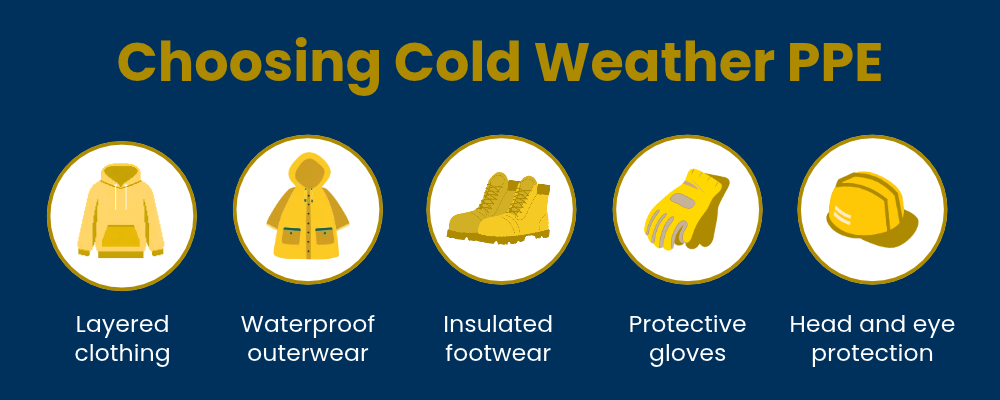
Choosing Cold Weather PPE
Before each shift, check that the required PPE is in good condition and appropriate for the weather.
- Layered clothing: Wear insulating layers that manage moisture and allow movement. Replace wet clothing as soon as practical. When arc-rated (AR) clothing is required, make sure any added layers or outerwear are appropriate for the arc-flash hazard, and avoid meltable synthetic fabrics.
- Waterproof outerwear: Use waterproof jackets and pants suited to the conditions and compatible with required PPE.
- Insulated footwear: Choose insulated, waterproof footwear with appropriate traction for wet, muddy, or icy surfaces. Where required, use electrical hazard (EH)-rated footwear, and change wet socks promptly.
- Protective gloves: Select gloves that provide warmth and sufficient dexterity. When electrical protective gloves are required, use properly rated equipment. Ordinary winter gloves are not a substitute. Inspect rubber insulating gloves before each use, and follow manufacturer guidance before adding liners.
- Head and eye protection: Ensure cold-weather accessories, such as hard hat liners, work with required hard hats, eye protection, and high-visibility gear.
Cold Weather Safety Practices
Along with appropriate winter PPE, crews should:
- Check weather forecasts and jobsite conditions throughout the shift.
- Schedule warm-up breaks and provide access to a warm, dry area.
- Use a buddy system so coworkers can watch for early signs of cold stress in each other.
- Keep spare dry clothing, gloves, and socks available.
- Clear or mark slippery walkways and maintain safe access routes.
- Provide adequate lighting and high-visibility apparel for shorter days and low-visibility storm conditions.
- Inspect tools, cords, and equipment for moisture-related damage.
- Pause or modify work when ice, wind, cold, or poor visibility creates unsafe conditions.
Supervisors and crew members should communicate about changing conditions and report symptoms promptly rather than pushing through them.
Winter Storm Safety and Electrical Hazards
Pacific Northwest storms can damage trees, utility infrastructure, and building electrical systems. Whether performing scheduled work or responding to storm damage, electricians must follow established safety procedures and work within their training and authorization.
Responding to Downed Lines and Damaged Equipment
Treat downed power lines and damaged electrical equipment as energized until qualified personnel verify otherwise.
- Stay away from downed lines, damaged utility equipment, and wires touching trees, fences, or standing water.
- Never touch or move a downed line, even if it appears inactive.
- Keep others clear of the hazard and report it to the utility. If anyone is in danger, call emergency services.
- Report damaged equipment and coordinate with utility personnel before proceeding.
- Follow required isolation and verification procedures before working on damaged electrical systems.
Keep Up with Electrical Industry Updates
The NECA-IBEW Local 48 partnership connects electrical contractors and workers with industry resources and professional development. Visit the Oregon-Columbia Chapter of NECA or IBEW Local 48 to learn more.
For business promotion resources, visit the Marketing Support page.
SIGN UP FOR OUR NEWSLETTER