
How Being Part of a Reliable, Skilled Workforce Helps You Win More Bids

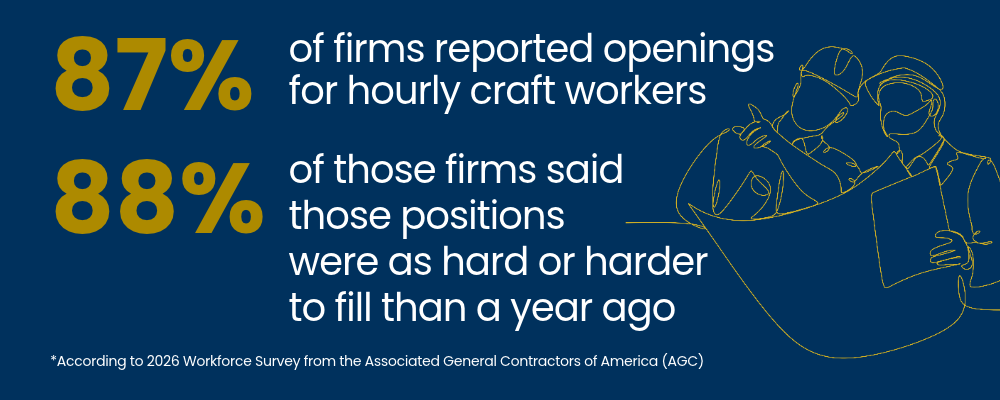
Winning commercial electrical work takes more than a competitive price. General contractors (GCs) and developers need electrical contractors who can staff projects, coordinate with other trades, and deliver quality work on schedule. Labor availability is a real concern across the industry: in the 2026 Workforce Survey from the Associated General Contractors of America (AGC), 87% of firms reported openings for hourly craft workers, and 88% of those firms said those positions were as hard or harder to fill than a year ago. A reliable, skilled workforce can help your bid stand out.
The NECA-IBEW partnership gives you practical advantages to bring to every bid: access to structured apprenticeship training, ongoing workforce development, and industry resources focused on electrical construction. When you connect those advantages to your skilled electrical workforce, you give clients a clearer picture of the value your company brings. Below, we cover how to bid commercial electrical jobs with a stronger electrical bid proposal, clear contractor prequalification materials, and a proposal that stands out in bid leveling.
The NECA-IBEW Advantage for Electrical Contractors
When potential clients evaluate electrical contractors, they look at more than cost. They also consider qualifications, safety records, staffing plans, and the ability to manage the work. NECA-IBEW contractors can point to the partnership’s established training system as evidence of their commitment to developing skilled electricians.
The NECA-IBEW Electrical Training Center (NIETC) pairs weekly classroom instruction with paid on-the-job training. Inside Electrician apprentices complete up to 8,000 hours of on-the-job training alongside school one day per week, building skills in electrical theory, code requirements, installation practices, and jobsite safety. This foundation helps prepare apprentices for the demands of electrical construction, while ongoing development helps workers continue building their skills.
Use the tips below to put that advantage into practical terms when talking with prospective clients.
Build an Electrical Bid Proposal Around Value
When you bid on electrical jobs, an effective electrical bid proposal clearly outlines the scope, pricing, and plan for completing the work.
- Review the plans, specifications, and addenda carefully, and attend pre-bid meetings or site walks when offered.
- Confirm bid deadlines, bonding and insurance requirements, and submission format before you finalize pricing.
- Include labor and material costs, and highlight relevant experience, project management capabilities, and safety practices.
- Explain how your team will coordinate with other trades and address project-specific requirements.
- Where available, include measurable results such as on-time completion rates, inspection outcomes, callbacks, or rework history. Documented performance helps clients evaluate your proposal beyond its initial price.
Showcase Contractor Prequalification
Contractor prequalification is the screening process GCs and owners use to review your company’s capabilities before inviting you to bid. They want to know whether you have the people, experience, and systems to deliver.
- Show current licenses, insurance and bonding documents, safety records (such as your EMR and OSHA logs), training records, project references, and examples of completed work.
- Highlight relevant experience with similar project types and explain the quality-control practices used on job sites.
Your NECA-IBEW affiliation can strengthen your prequalification package by showing your connection to an established training and industry partnership. For contractors considering membership, access to workforce development resources is one business benefit to evaluate as you plan for future work.
Stand Out in Bid Leveling
Bid leveling is how general contractors adjust competing bids to the same scope so they can compare proposals on an apples-to-apples basis. Depending on the project scope, GCs could be sifting through piles of proposals. Get to the top of the pile by making your proposal easy to evaluate.
- List out inclusions, exclusions, schedule assumptions, material allowances, and items requiring clarification.
- Respond promptly to questions and flag potential conflicts before they become change orders.
- Break out pricing by system, and list alternates, allowances, and unit prices separately.
Missing details, unclear exclusions, and unrealistic schedule assumptions can create questions even when your price is competitive. A complete, easy-to-review proposal helps clients understand your price and evaluate your plan without having to guess what’s covered.
Turn Your Electrical Contractor Reputation Into Repeat Business
Your reputation can help you win work long after you submit a proposal. Clients remember electrical contractors who communicate clearly, meet commitments, and resolve problems before they affect the wider project.
Track results, ask satisfied clients for references, and use specific examples when discussing past work. Explain how your team managed a tight schedule, coordinated a complex installation, or avoided rework.
Put the NECA-IBEW Advantage to Work
The NECA-IBEW Local 48 partnership helps members connect with electrical contractor resources, industry updates, and a network of knowledgeable professionals. For contractors considering membership, the partnership offers access to an established training system and a network focused on electrical construction standards.
Visit the NECA-IBEW website for news, updates, and membership details.
Looking for help promoting your business? Visit our Marketing Support page for resources.
SIGN UP FOR OUR NEWSLETTER