
What Data Centers Mean for Electricians in the Pacific Northwest
Data centers are expanding rapidly across the Pacific Northwest and the nation, and with that development comes a growing public conversation. For those in the construction and electrical trades, understanding the full picture helps inform how this sector fits into the region’s economic and environmental future.
Data Centers and Jobs
A common misconception is that data centers only generate temporary construction jobs. Yes, the initial build brings a significant surge of work, requiring large, skilled labor forces to complete. But the jobs don’t stop at ribbon-cutting. The jobs tied to data centers, ranging from construction to ongoing maintenance and technical operations, offer a broad and evolving employment footprint for the electrical trades. And the demand for specialized skills has prompted new training pathways within trade apprenticeship programs. As technology evolves, and it always does, skilled electricians are needed for ongoing retrofits, system upgrades, and new installations, creating continuous career opportunities beyond initial construction.
Data Centers and The Environment
Data centers and sustainability are legitimate areas of ongoing evaluation, and communities are right to ask questions about the environmental impact of data centers. At the same time, the technology powering these facilities is advancing, with each new build reflecting improved efficiency standards.
U.S. data centers currently account for 4.4% of total electricity consumption, with projections indicating a significant increase by 2030. While that’s a big number, context matters. Because data centers and warehouses consume large amounts of electricity, advanced energy management is crucial for controlling costs and improving operations.
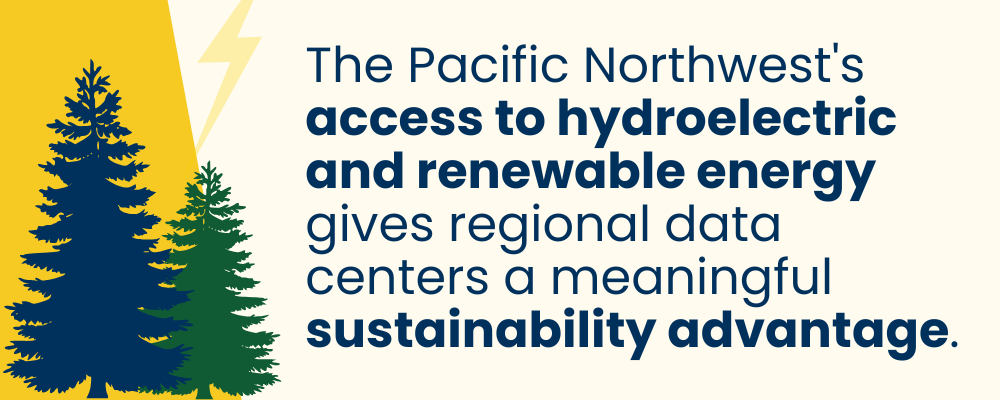
With energy costs climbing and sustainability concerns growing, implementing energy-efficient strategies is the new industry standard to ensure long-term viability. For example, data centers in the Pacific Northwest have access to hydroelectric and renewable energy, giving regional operators a meaningful sustainability advantage over facilities relying on fossil-fuel-heavy grids.
Water usage is another valid point of debate. Cooling systems in older or larger facilities can consume millions of liters per day. However, newer technologies such as AI-optimized power management and immersion cooling are actively shrinking that footprint. These innovations influence construction practices by requiring new skills, and AI-optimized power management is making each new generation of data centers measurably more efficient than the last.
Data Centers and Economic Impact
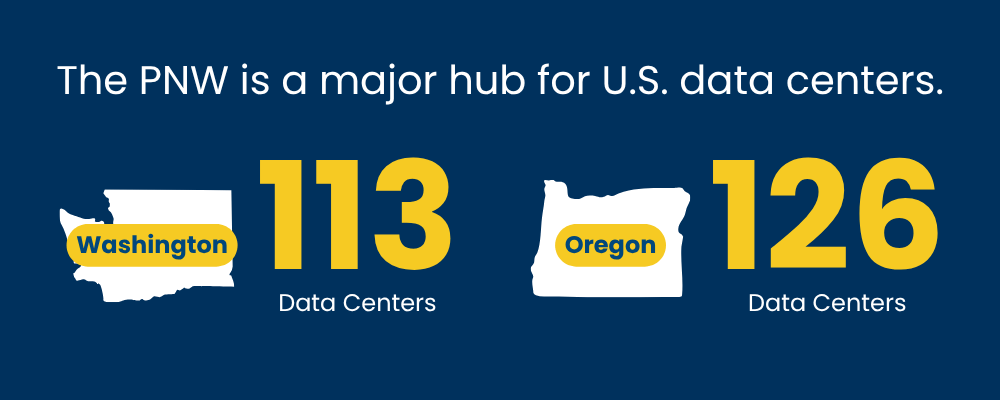
On the economic side, data centers generate local tax revenue, support infrastructure investment, and can attract additional business activity to a region. Washington has 113 data centers, and Oregon has 126, making the Pacific Northwest a significant part of the national digital infrastructure network. These facilities support cloud computing, artificial intelligence, healthcare systems, financial services, and a wide range of everyday digital services.
Data Centers Moving Forward
For electricians in the Pacific Northwest, data centers represent a long-term shift in where skilled work is valued. The environmental questions are real and worth watching, and the industry is actively responding with better technology, more efficient designs and cleaner energy sourcing. But the jobs, the tax base, the infrastructure investment, and the ongoing demand for specialized electrical skills tell a compelling story for the trades. As the region continues to attract data center development, electricians who invest in the training to understand these systems will be well positioned for decades of steady, meaningful work.
Learn About the NECA/IBEW Local 48 Partnership
For over a century, NECA and IBEW Local 48 electrical professionals have played a pivotal role in building Oregon and Southwest Washington.
Members gain access to continuing education, essential training, industry resources, and more. Visit the Oregon-Columbia Chapter of NECA or IBEW Local 48 to learn more about membership and resources.
SIGN UP FOR OUR NEWSLETTER
