
4 Top Construction Tech Trends in 2026
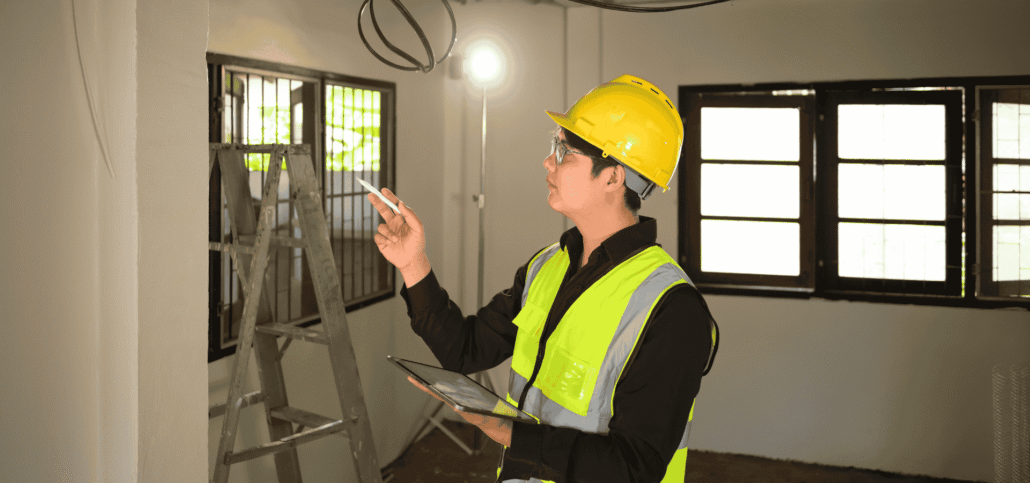
From artificial intelligence to advanced project management platforms, construction in 2026 is being shaped by technology trends and innovations that are changing what projects are planned and how they’re delivered.
Construction Industry Trends 2026: A Shifting Landscape
Technology adoption in 2026 is less about experimentation and more about practical value. Contractors are prioritizing tools that directly improve efficiency, reduce risk, and streamline workflows. And the broader industry is adapting as more energy requirements, demands, and challenges emerge.
1. AI Project Planning and Execution
Artificial intelligence is gaining traction, especially in planning and project analysis. AI tools are helping contractors forecast costs, identify risks, and optimize schedules with greater accuracy, making them essential for competitive project execution.
For example, predictive analytics can flag potential delays before they happen, allowing teams to adjust proactively. AI is also being used to analyze historical project data, thereby improving bidding strategies and resource allocation.

While AI isn’t replacing human expertise, it’s becoming a valuable support tool, especially in a market where margins are tight and efficiency matters more than ever.
2. Construction Automation
Automation is steadily reshaping how work gets done on the jobsite. From prefabrication to semi-automated equipment, these technologies are helping reduce labor strain while improving consistency.
In specialized sectors like data centers, which continue to expand rapidly, automation plays a key role. These projects require high precision, redundant power systems, and strict timelines, making automated processes especially valuable.
Even outside large-scale builds, automation is appearing in smaller ways, such as improved installation tools and streamlined workflows that reduce manual effort and enhance safety.
3. Construction Project Management Software
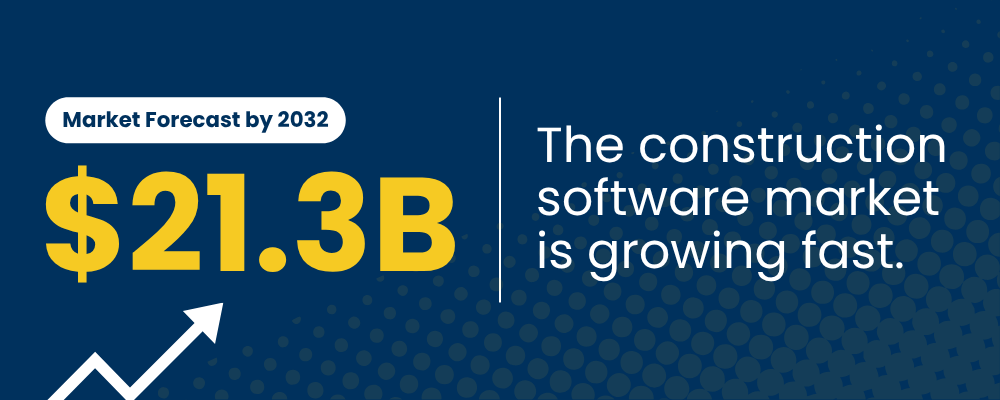
If there’s one area where adoption is nearly universal, it’s project management software. In 2026, these platforms are essential for keeping projects on track. As a prominent example, the construction software market is predicted to reach $21.3 billion by 2032.
Digital estimating platforms, scheduling systems, and connected jobsite tools are quickly becoming standard. These technologies streamline workflows, help teams manage costs in real time, improve communication between the office and the field, and reduce costly errors.
They allow teams to manage documentation, track progress, coordinate subcontractors, and maintain visibility across all phases of construction. With so many projects now involving phased timelines and multiple stakeholders, having a centralized system is critical. These tools also support better collaboration, ensuring that everyone, from field crews to project managers, has access to the same information in real time.
4. Electrification and Energy Systems
At a broader level, electrification continues to be one of the most influential forces shaping construction projects. Building codes and policies are pushing for reduced emissions and improved energy performance, which is driving demand for electrical upgrades and system redesigns.
- Projects increasingly involve retrofitting building equipment with electric systems, such as heat pumps and advanced HVAC technologies. This shift isn’t just about compliance. It’s also about long-term efficiency and operational savings.
- Electric vehicle (EV) infrastructure is another major factor. Charging stations are being installed across commercial properties, multifamily housing, and public facilities. While timelines can vary due to utility coordination, the overall trend is clear: power distribution planning is becoming more complex and more critical.
- Emerging concepts like thermal energy networks and advanced power systems are also entering early adoption phases, signaling promising directions for the industry’s future and inspiring confidence in ongoing innovation.
Taken together, these trends point to a construction industry that is becoming more connected, data-driven, and performance-focused than ever before. Success in 2026 and the near future isn’t about chasing every new innovation—it’s about adopting the right technologies that deliver measurable results on the jobsite and beyond.
Discover NECA-IBEW Local 48
The construction industry in 2026 is defined by adaptation. For contractors, staying competitive means understanding which trends actually deliver value. For over a century, the NECA–IBEW Local 48 partnership has focused on advancing Oregon and Washington’s electrical sector. Visit our membership page to learn more.
SIGN UP FOR OUR NEWSLETTER

