
Guide to AI & the Electrical Industry: What You Should Know

Artificial intelligence is already being used in electrical work, from smarter grids and connected equipment to software that supports estimating and project planning.
For electricians and contractors, the question isn’t whether AI exists. It’s how it changes the work on the jobsite. Which tasks can it actually assist with, and which ones still rely on hands-on expertise?
AI isn’t replacing skilled electricians, but it is affecting how projects are planned, managed, and executed. Understanding where it’s being applied, the challenges it brings, and its impact on electrical demand helps professionals make informed decisions in a rapidly evolving environment.
What Is AI & Why Does It Matter to the Electrical Industry?
AI refers to software that analyzes large amounts of data to spot patterns, predict outcomes, and support day-to-day decision-making. In the electrical industry, this usually means using data from power grids, equipment, buildings, and job costs to improve efficiency and reliability.
As electrical systems expand to support renewable energy, EV charging, smart buildings, and higher power demand, AI helps utilities and contractors forecast load, catch equipment issues early, optimize energy use, and keep projects on track and within budget.
7 Ways AI Is Being Used in the Electrical Industry
AI is already finding practical applications across the electrical industry. From improving efficiency to helping manage complex systems, it’s changing how contractors, electricians, and utilities work every day. Here are seven ways AI is being put to use right now.
1) Smart Grid Management & Load Forecasting
AI systems analyze historical energy use, weather trends, and real-time grid data to forecast demand and generation more accurately. This helps utilities reduce waste and integrate renewable energy without compromising reliability.
Why it matters: Better forecasting drives grid upgrades, system expansions, and long-term infrastructure projects.
2) Predictive Maintenance & Asset Monitoring
AI monitors transformers, switchgear, and substations to identify early signs of wear or failure. Addressing issues before breakdowns occur reduces outages and emergency repairs.
Why it matters: Increased demand for sensor installation, system upgrades, and data-driven maintenance work.
3) Real-Time Grid Control & Fault Detection
AI-enabled systems continuously assess grid health, isolate faults, and reroute power automatically to minimize downtime.
Why it matters: Growing need for electricians skilled in automation, protection systems, and high-voltage controls.
4) Renewable Energy & Distributed Resource Optimization
Balancing intermittent sources like solar, wind, and battery storage is one of AI’s strongest use cases. AI forecasts generation and demand to help stabilize the grid as renewables scale.
Why it matters: Contractors play a key role in installing and maintaining increasingly complex renewable and storage systems.
5) Automated Inspections, Quality Control & Safety
AI analyzes images, sensor data, and reports to detect defects, safety risks, and compliance issues across facilities and infrastructure projects.
Why it matters: Safer jobsites, higher-quality installations, and fewer inspection delays.
6) Customer Energy Management & Smart Systems
AI supports demand-response programs, dynamic pricing, and energy management tools that help customers monitor and optimize energy use.
Why it matters: Growing demand for smart panels, EV charging infrastructure, building automation, and connected systems.
7) Estimating, Bidding & Business Operations
AI-assisted estimating tools help contractors streamline material takeoffs, cost forecasting, scheduling, and risk analysis.
Why it matters: AI is becoming both a practical business tool and a utility technology.
How AI Is Increasing Demand on Electrical Infrastructure
AI applications require enormous computing power and energy, driving demand for large data centers and the electrical infrastructure that supports them. As AI adoption grows, these facilities are placing increased strain on local electrical grids, raising questions about long-term capacity planning.
In fact, Oregon passed a bill requiring data centers to pay for the actual strain they place on the electrical grid rather than passing those costs on to consumers. While this has sparked debate about where future facilities may be built, it highlights a broader trend: AI-driven growth is accelerating demand for electrical infrastructure.
What this means for contractors and electricians:
- Utility upgrades and substation projects
- High-voltage and transmission work
- Data-center construction and retrofits
- Long-term grid modernization investments
Will AI Replace Electricians?
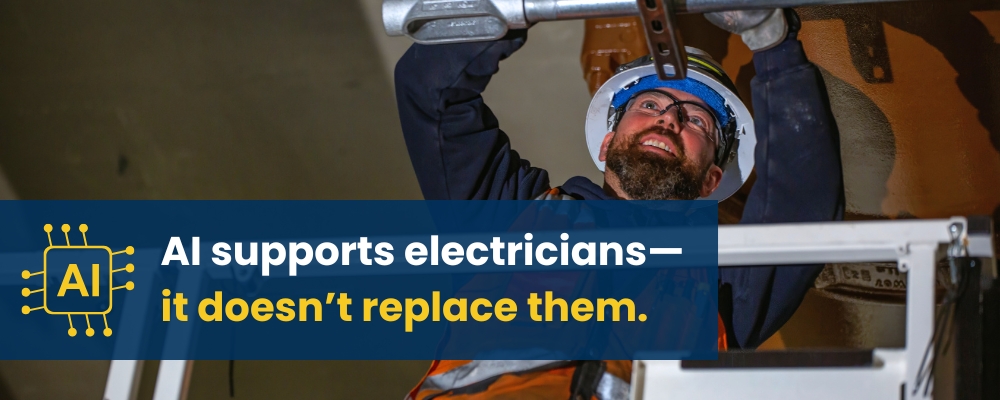
AI cannot install conduit, terminate conductors, troubleshoot live systems, or ensure work meets code requirements on a jobsite. Industry experts consistently emphasize that AI augments skilled labor rather than replaces it. What is changing is the type of work electricians support: more automation, more data-enabled equipment, and greater involvement in secure, connected systems.
As buildings, substations, and industrial facilities become more intelligent, electricians are increasingly needed to install, power, and maintain the infrastructure that makes those systems work. That includes sensors, controls, networking hardware, backup power, and the electrical backbone behind AI-driven tools. In practice, AI tends to reduce manual paperwork and guesswork, while increasing demand for skilled professionals who understand both electrical systems and how technology interacts with them.
Become Part of Our Community of Electrical Professionals
The NECA–IBEW Local 48 partnership gives members access to a strong professional community and resources that support long-term career growth. Through education, hands-on training, and networking, members learn from experienced mentors, work on real-world projects, and stay current with the tools and technologies shaping today’s electrical industry.
Visit the Oregon-Columbia Chapter of NECA or IBEW Local 48 to learn more about membership and resources.
SIGN UP FOR OUR NEWSLETTER
